
Ask most teams what is wrong with their WhatsApp customer service and they will say the same thing: replies are too slow.
They are often solving the wrong problem. A fast answer from the wrong person can damage trust more quickly. The failure usually starts when a message reaches somebody who cannot check the real answer.
The Question Behind Every WhatsApp Mistake
Before writing a reply, ask one question: does the person answering have access to the approved source?
Friendliness and availability matter, but neither proves correctness. A salesperson can be warm and quick while still being wrong about an order’s shipping status. That information may live in a system they do not use.
This is not always a training gap. It is often a routing gap.
Who Can Check This, And Where?
Run that test before routing almost any customer message. It replaces availability-based guesswork with a source-based decision.
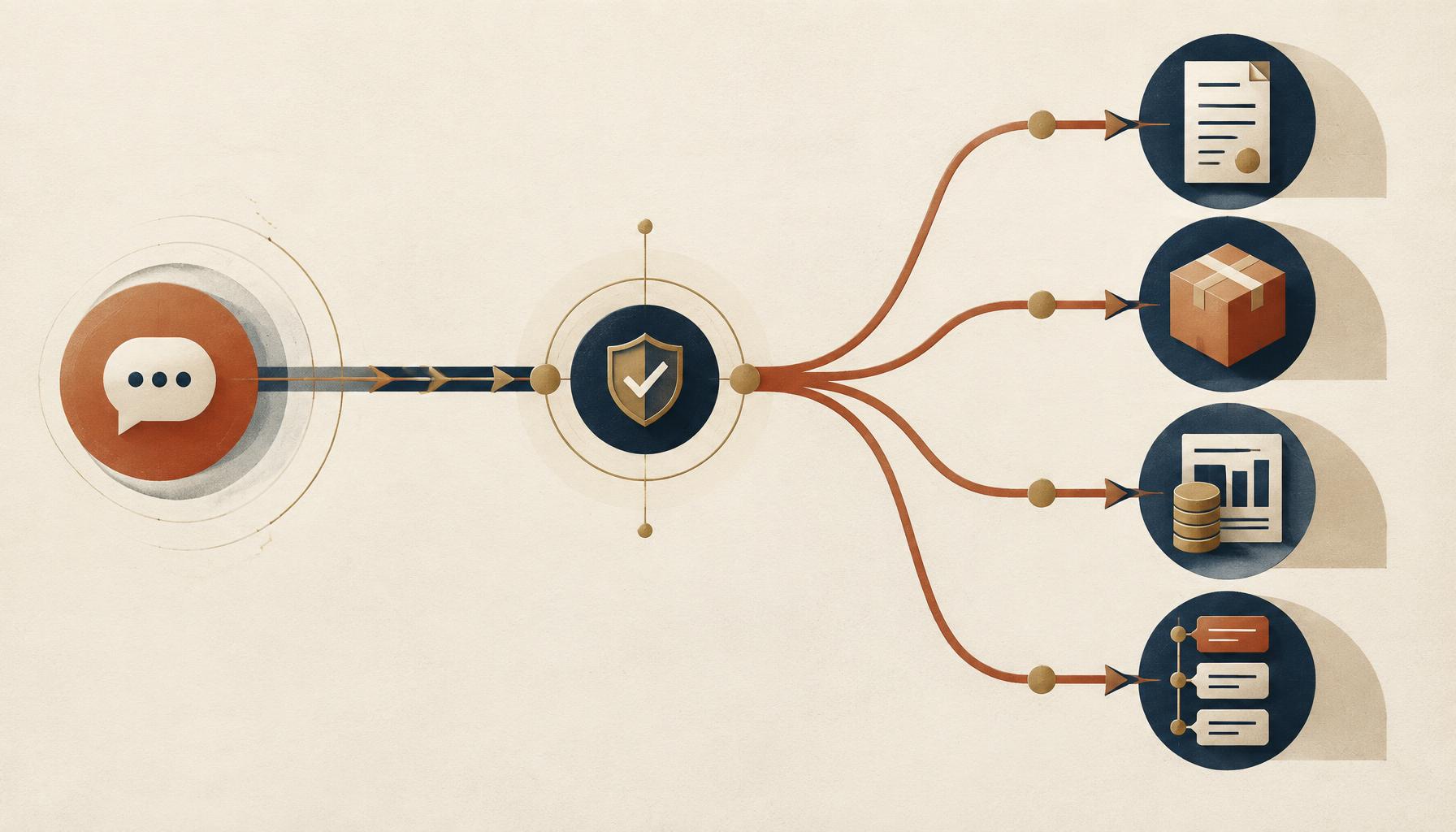
Four Messages, Four Ownership Paths
The examples below are fictional and use no customer data.
“Can you quote 500 units?”
Approved Source
Current pricing
Check today’s approved rate before replying.
“Where is my order?”
Approved Source
Order system
Confirm identity before sharing private details.
“What do I still owe?”
Approved Source
Finance records
Verify the balance rather than relying on memory.
“Who is handling my complaint?”
Approved Source
Complete thread
Keep one owner from acknowledgement to resolution.
Verification Is Part Of The Service
Teams sometimes treat identity checks as a delay between the customer and the answer. For private information, verification is part of delivering the service safely.
A phone-number match can suggest a CRM record. It does not prove who is holding the device. Numbers can move between family members, be reassigned when roles change, or point to more than one record.
Use a simple operating habit: see the match, confirm the person through the organisation’s approved process, then answer. A CRM match is a clue, not a password.
One Thread Can Still Have Two Internal Owners
Conversations rarely stay tidy. A buyer discussing an invoice may also ask for a quote on the next order.
Do not make the customer manage two separate conversations. Keep one visible thread and one steady point of contact. Finance can handle the invoice task while sales handles the quote behind the scenes.
The customer experiences continuity. The team coordinates specialist work through a shared ownership model. The WhatsApp Customer Collaboration Through Gosthi use case shows how that employee-owned workflow can connect WhatsApp threads with permitted CRM context.
What A Good Handover Actually Contains
Shifts end and people take leave. The conversation should not restart because its owner logged off.
- 01What the customer originally asked
- 02What has already been verified
- 03What was checked and in which system
- 04What genuinely remains open
Leave out one of these details and the next owner either guesses or asks the customer to repeat the story. That is the exact failure a team inbox should prevent.
When The Right Move Is To Stop
Confidence is not the same as correctness. Escalate rather than answer in these situations:
- Identity cannot be confirmed and the question touches private account details.
- The facts themselves are genuinely in dispute.
- A reply would make a commitment nobody on the thread is authorised to make.
- The system that holds the approved answer is unavailable.
A short pause for the right answer is better than a quick answer that later has to be withdrawn.
Five-Minute Audit
Review Your Last Ten Conversations
For each conversation, record who owned it, which system supplied the answer, and whether identity was confirmed before private information was shared.
Where those answers become unclear, write the missing routing rule. The problem may be ownership rather than tooling.
Where Mimasa AI Fits
Mimasa AI can turn approved ownership rules into an operational workflow. Supported incoming messages can be checked against permitted CRM context, routed into the appropriate Gosthi thread, and assigned according to the logic the team defines.
The existing CRM, order platform, and finance system remain the systems of record. The Agentic Automation layer coordinates the approved match, route, task, reply, and evidence trail across them.
Identity policy and business judgement still belong to people. Employees handle disputes, sensitive exceptions, and commitments that require authority. Mimasa AI helps the message reach the right person with the right context.