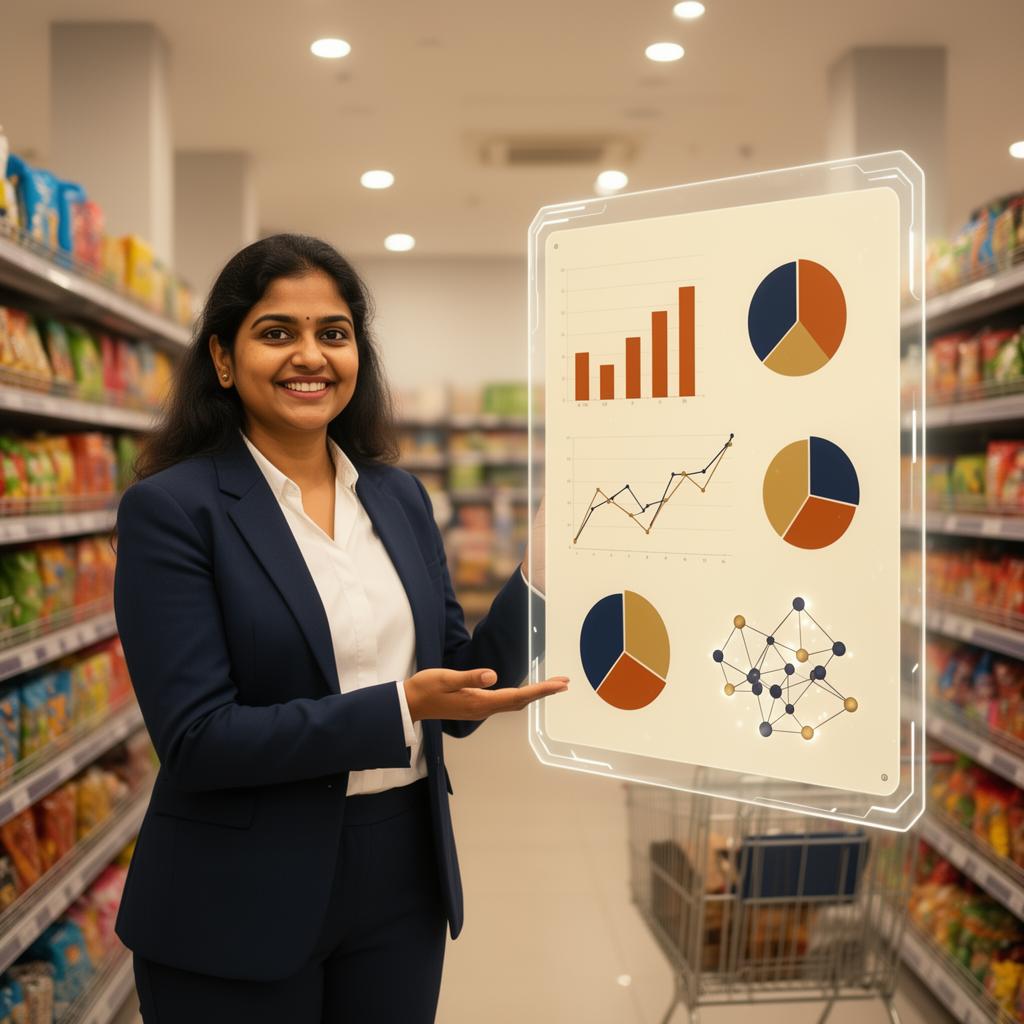
Retail Business Intelligence That Turns Data Into Action
Connect store, e-commerce, inventory, customer, marketing, finance, and supply chain data in one governed platform. Ask questions in plain language, build useful dashboards, and connect approved insights to action.
Cloud, private VPC, and on-premise options · Role-based access · Audit trails · Human approvals
From fragmented retail systems to governed insight and action.
Unified Retail Data
One Platform For Retail Analytics, Intelligence, And Automation
Retail data lives in many places. Stores hold POS transactions. E-commerce platforms provide order and settlement files. ERP systems track finance and stock, while CRM, loyalty, marketing, and web platforms hold other parts of the customer journey.
Mimasa AI connects these sources, prepares data with natural-language instructions, saves trusted views, and lets authorised users ask business questions without writing SQL. The same journey can produce charts, reports, presentations, AI-agent decisions, and governed workflows.
This makes Mimasa AI more than a collection of retail analytics solutions. It creates one path from raw retail analytics data to insight, decision, and controlled action.
What Is Retail Analytics?
Retail analytics is the use of sales, stock, pricing, customer, store, web, and marketing data to improve retail decisions. Retail business analytics helps teams see what happened, understand why it happened, and decide what to do next.
Which stores, states, channels, or products drive revenue?
Where could stockouts or excess stock affect sales?
Which offers support sales without damaging margin?
Why are returns rising for a product or marketplace?
Which customer groups buy again, and which leave?
How do online and offline results compare?
Traditional analytics often ends with a chart. Mimasa AI can connect an approved result to a report, alert, task, agent, or workflow with human review where required. That is how analytics for retail becomes useful in daily work.
Data-To-Action Journey
How Mimasa AI Builds Retail Business Intelligence
01
Connect Retail Data
Bring authorised POS, ERP, CRM, loyalty, inventory, warehouse, marketplace, finance, marketing, web, CSV, and Excel data into one governed journey.
02
Prepare It In Plain Language
Use natural-language instructions and more than 100 built-in functions to filter, sort, join, merge, clean, normalise, group, and calculate data.
03
Create A Trusted View
Save governed datasets and Intelligent Data Snapshots so teams reuse the same definitions for sales, margin, stock, returns, customers, and campaigns.
04
Ask Business Questions
Ask questions such as, “Show sales and gross margin by state and marketplace for last month,” without writing SQL.
05
Share The Answer
Build dashboards, reports, and presentations for store teams, category managers, finance, marketing, operations, and leadership.
06
Automate The Next Step
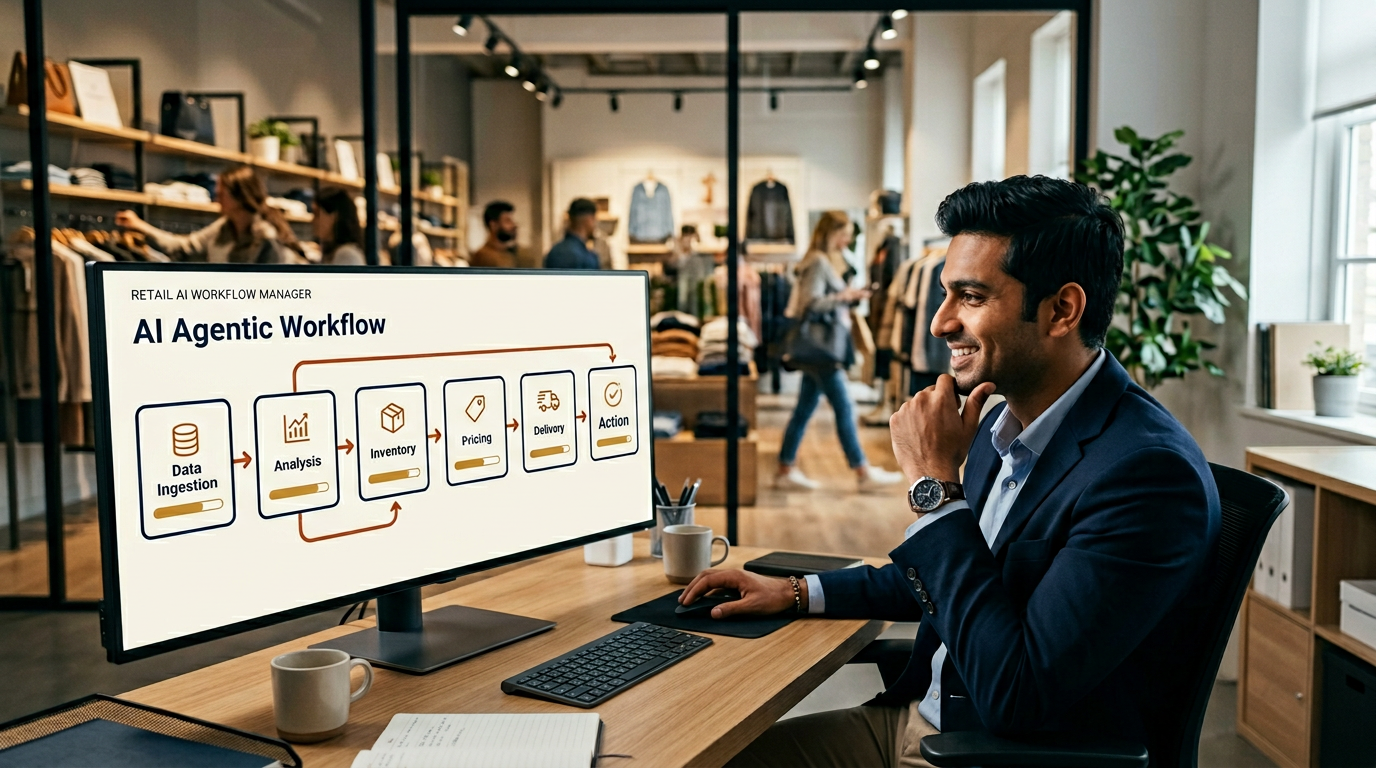
Use an AI agent or agentic workflow to monitor a measure, prepare a file, route an exception, request approval, or begin the next process.
Marketplace Finance Workflow
Automate Marketplace Sales And State-Wise GST Reporting
Amazon, Flipkart, Myntra, and other marketplaces produce different CSV or XLSX reports. Column names, charges, returns, settlements, and formats can make month-end work slow for e-commerce MSMEs and their chartered accountants.
Mimasa AI can standardise the repeated data work and produce reusable sales analysis from the same governed dataset.
Professional Review: Mimasa AI prepares and organises data for review. Tax treatment and return filing should be validated by an authorised finance or tax professional.
01Start a scheduled workflow at month-end.
02Collect authorised marketplace files from defined sources.
03Read and standardise each CSV or XLSX file.
04Map fields across Amazon, Flipkart, Myntra, and other platforms.
05Separate sales, returns, fees, deductions, and required values.
06Group sales and tax working data by state.
07Create state-wise GST working reports and sales analysis.
08Flag missing data, duplicates, and unusual values for review.
09Route the output to finance or a CA before filing or further use.
10Feed the approved dataset into dashboards, reports, and workflows.
Retail Solutions
Explore Focused Retail Solutions
Go deeper into a specific retail decision area, built on the same governed data, agent, and workflow layer.
Use governed retail data insights across inventory, stores, pricing, customers, campaigns, digital journeys, channels, and forecasts.
Inventory And Merchandising Analytics
Combine sales velocity, stock, lead time, and location data. Find products at risk of a stockout, identify slow-moving items, and compare sell-through by store, state, warehouse, channel, category, or SKU.
“Which SKUs may run out in the next seven days?”
Retail Store Analytics
Give store and regional managers a shared view of sales, margin, stock, returns, and target performance. Analytics for physical retail can combine available POS, footfall, transaction, staffing, stock, and promotion data.
“Which stores missed target, and what changed?”
Pricing Analytics In Retail
Review price, demand, stock, margin, promotion, and approved signals together. Compare list price, realised price, discount, and margin, then route suggested changes for human approval.
“Where are discounts rising without stronger sales?”
Retail Customer Analytics
Build retail customer insights from authorised transaction, loyalty, CRM, support, return, and channel data. Explore repeat behaviour, product affinity, average order value, and customer groups.
“Which customer groups have high returns?”
Retail Marketing Analytics
Connect campaign cost, audiences, visits, orders, revenue, and margin. Retail campaign analytics shows which activity creates useful business results, not only clicks.
“Did the campaign improve profitable sales?”
Retail Web Analytics
Connect approved website behaviour with product, order, and campaign data. Compare traffic and conversion trends, find journeys where customers leave, and alert the appropriate team.
“Where does the product journey lose customers?”
Omnichannel Retail Intelligence
Join store, marketplace, website, returns, stock, fulfilment, and customer activity. Retail omnichannel solutions help teams understand channel effects and decide where inventory should move.
“Are online promotions changing store demand?”
Forecasting And Replenishment Support
Use historic sales, seasonality, events, stock, and approved data to create forecasts. Agents can flag changing risks and workflows can prepare replenishment recommendations for review.
“What demand risks need attention this week?”
Real Product View
Retail Data Analysis In One Shared View
A unified dashboard helps teams compare inventory, sales, customer, campaign, store, and channel measures without creating another private spreadsheet version of the truth.
A governed retail analytics view for cross-functional decisions.
Retail Analytics Examples: From Question To Action
Business QuestionRetail Data InsightGoverned Action
Business Question
Which products are close to a stockout?
Insight
Stock risk by SKU and location
Action
Alert inventory or prepare a reorder request
Business Question
Which marketplace drove the best margin?
Insight
Sales, fees, returns, and margin by channel
Action
Add the result to the monthly review
Business Question
Where are returns rising?
Insight
Return rate by product, state, and channel
Action
Create a category-owner investigation
Business Question
Did the campaign improve profitable sales?
Insight
Revenue, margin, and uplift by audience
Action
Recommend budget changes for approval
Business Question
Which stores missed their targets?
Insight
Store performance and key drivers
Action
Send a regional exception report
Business Question
What is needed for state-wise GST work?
Insight
Standardised marketplace transactions by state
Action
Route files and exceptions to finance
These retail analytics examples show the difference between dashboard-only software and an action-ready platform. Mimasa AI can connect retail analytics and insights to the next controlled step.
Platform Demo
See The Platform In Action
See how Mimasa AI turns natural-language requests into analysis, visual output, and a clearer next step. The same platform journey can be configured around authorised retail data and business controls.
Role-Specific Value
Retail Data Analytics Solutions For Every Team
Business Leaders
See revenue, margin, stock, customer, channel, and forecast trends in one view, then ask follow-up questions without waiting for a new report.
Store And Regional Teams
Compare targets, stock, sales, returns, and local performance. Receive alerts when an agreed measure moves outside its range.
Category And Merchandising
Review product, price, promotion, margin, inventory, and sell-through by SKU, category, store, marketplace, or region.
Marketing Teams
Connect spend with sales and margin, build reusable campaign views, and schedule clear retail marketing analytics reports.
Finance Teams And CAs
Standardise marketplace reports and prepare state-wise sales and GST working data from one governed dataset.
Data And IT Teams
Connect sources, control access, manage shared data, and expand self-service while preserving technical ownership.
Connected Data Intelligence Stack
Key Mimasa AI Capabilities For Retail
Support self-service business analytics in retail and governed automation through one connected set of products.
Data Analytics For Retail With Governance Built In
Many tools stop at a chart. Mimasa AI connects retail data preparation, analysis, dashboards, reports, AI agents, and workflows while preserving human control.
One Path From Data To Action
Move from connected sources to retail data analysis and the next approved step.
Plain-Language Access
Let authorised business users ask questions in familiar terms without writing SQL.
Reusable, Governed Data
Save approved datasets and snapshots instead of creating more spreadsheet copies.
Automation With Control
Add schedules, conditions, actions, approvals, and exception paths where needed.
Flexible Deployment
Use cloud, private VPC, or on-premise deployment according to infrastructure needs.
Model Choice
Balance performance, cost, and governance with commercial or open-source language models.
Retail & E-Commerce FAQs
Clear answers about retail business intelligence, marketplace reporting, governance, analytics, and agentic automation.
Retail business intelligence turns sales, inventory, pricing, customer, marketing, store, and e-commerce data into useful information for decisions. Mimasa AI adds a governed action layer, so an approved insight can feed an AI agent or workflow.
Retail analytics examines retail data to find trends, causes, risks, and opportunities. Business intelligence usually includes the wider process used to prepare data, define measures, build dashboards, create reports, and support decisions. The terms overlap, but analytics often describes the investigation while business intelligence describes the operating system around it.
Mimasa AI can work with authorised data from connected databases, business systems, APIs, and uploaded CSV or Excel files. Common retail sources include POS, ERP, CRM, loyalty, inventory, warehouse, marketplace, marketing, finance, and web data. Each connection depends on the systems and access available in your environment.
Mimasa AI can collect or receive authorised marketplace files, standardise the data, group transactions by state, prepare GST working reports, and create related sales analytics. A chartered accountant or authorised finance professional should review the output and confirm tax treatment before filing.
Yes. Mimasa AI can ingest CSV or XLSX files from different marketplaces, map their fields, clean the data, and create one prepared dataset. Validation rules can flag missing, duplicate, or unusual values for human review.
Common retail analytics use cases include inventory analysis, store performance, demand forecasting, price and promotion review, customer analysis, campaign measurement, marketplace sales reporting, returns analysis, and omnichannel reporting.
It can combine authorised purchase, loyalty, CRM, service, and return data to create customer segments and patterns. Teams can explore repeat purchase, product affinity, order value, returns, and other approved measures.
Yes. Where source data is available, Mimasa AI can analyse POS sales, inventory, store targets, returns, promotions, footfall, and other store measures. Managers can ask questions in natural language and use dashboards or scheduled reports.
Mimasa AI can support agents and workflows that monitor approved data, make recommendations, trigger actions, and request approval. The level of automation depends on your integrations, permissions, business rules, and chosen human controls.
Mimasa AI supports role-based access, controlled sharing, and audit trails. It can be deployed in the cloud, a private VPC, or on-premise. Your organisation still defines its data policies, access model, and compliance process.
No. It reduces repeated data preparation and reporting work. Analysts and data teams still guide definitions, quality, governance, complex analysis, and high-impact decisions.
The timeline depends on source systems, data quality, integrations, governance needs, and the first use case. A focused workflow, such as monthly marketplace report preparation, can provide a practical starting point before a wider rollout.
Start With One High-Value Problem
Turn Retail Data Into Clear Decisions And Governed Action
Unify the data, give your team faster answers, and automate the next repeatable step with Mimasa AI.