
Analyse Titles and Formats
Compare programmes, series, episodes, clips, trailers, articles, formats, genres, languages, or other approved content groupings.
Connect content, campaign, audience, channel, cost, advertising, social, and revenue data. Mimasa AI helps media teams understand performance across platforms, explain important changes, automate reporting, and coordinate approved optimisation workflows.
Ask questions in natural language. Build content performance dashboards. Create agents that monitor critical metrics, investigate possible drivers, prepare recommendations, and move consequential actions through a campaign approval workflow.
For broadcasters, OTT platforms, studios, publishers, agencies, sports-media teams, and digital content businesses.
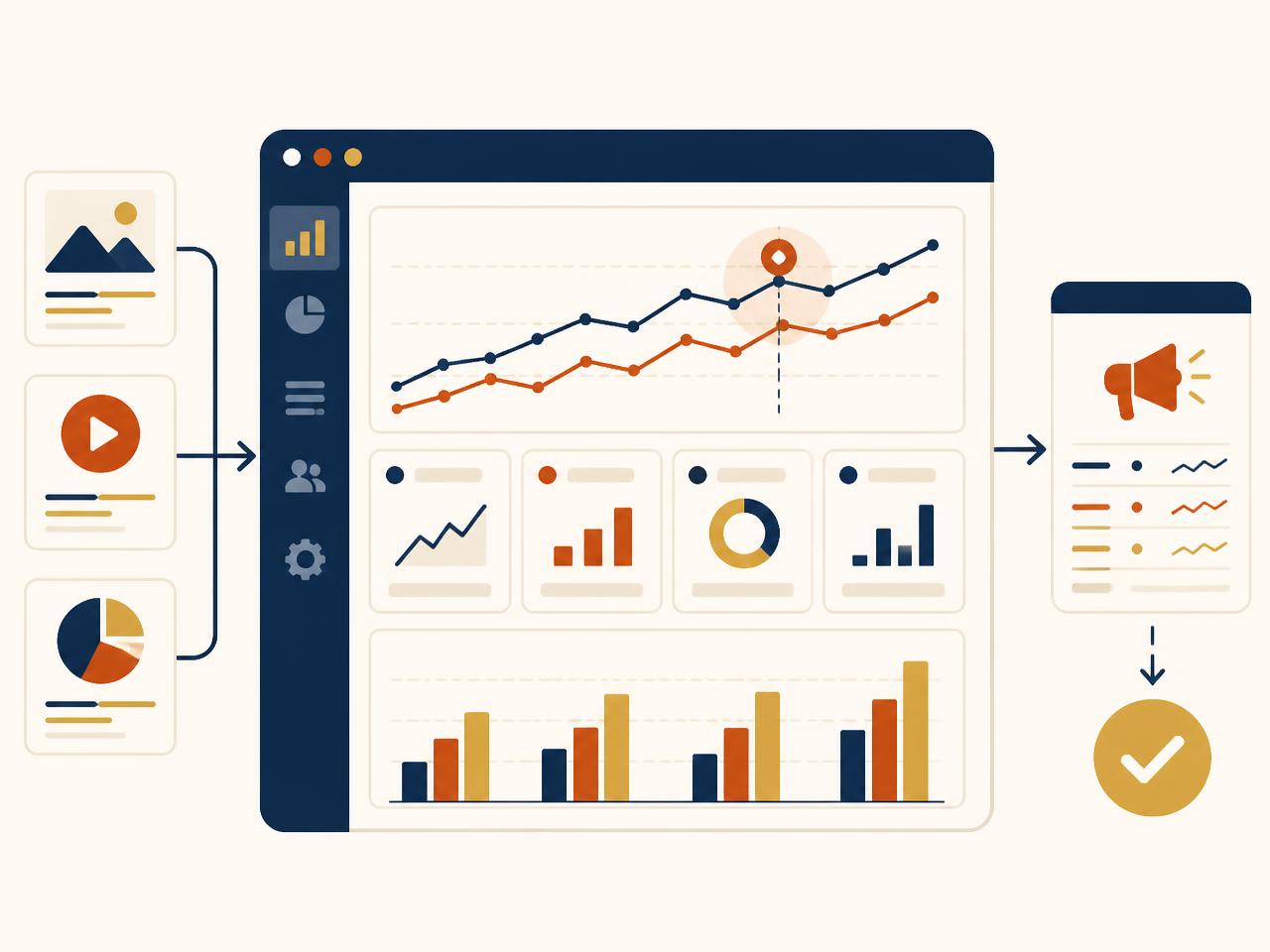
Media performance is distributed across OTT platforms, broadcast systems, websites, apps, social networks, ad platforms, campaign tools, CRM applications, spreadsheets, and finance systems. Each platform uses different identifiers, definitions, time periods, and reporting formats.
As a result, teams spend time collecting data before they can conduct meaningful content performance analysis. Even after the report is assembled, it may explain what changed without clarifying why it changed or what should happen next.
Mimasa connects approved sources through Data Extraction and builds a governed performance layer. Teams can standardise measures, compare titles and campaigns, examine engagement, relate costs to available outcomes, and turn findings into reports or agentic workflows.
Content analytics measures how media assets, titles, programmes, episodes, clips, articles, or other content perform against defined business objectives. Relevant measures can include reach, views, watch time, completion, engagement, acquisition, cost, attributed revenue, or other customer-approved metrics.
On this page, content analytics refers to business performance—not semantic analysis of what appears inside a video. Media Content Intelligence separately handles scene understanding, metadata generation, and classification.
Mimasa combines connected data with natural-language analysis, dashboards, automated reporting, and AI agents. Teams can move from a metric to its supporting data, explore possible drivers, create a review task, and coordinate an approved response.
A useful content performance analysis begins with consistent definitions and traceable data. Mimasa helps teams align source identifiers and measures through Data Transformation before comparing results.
Compare programmes, series, episodes, clips, trailers, articles, formats, genres, languages, or other approved content groupings.
Review reach, starts, watch time, completion, repeat consumption, interactions, or other available signals through content engagement analytics and video engagement analytics.
Understand digital media performance across OTT, broadcast, web, app, social, and partner channels using consistent dimensions where the source data permits comparison.
Compare launch windows, weeks, seasons, scheduling periods, release strategies, and lifecycle stages without confusing different observation periods.
Bring available acquisition, production, distribution, promotion, advertising, subscription, or revenue information into a governed content ROI view.
Use AI-assisted analysis to identify anomalies, correlations, contributing dimensions, and plausible drivers. Present them as evidence for investigation—not automatically as causal conclusions.
Audience measures appear here as inputs and dimensions. For segmentation, retention, and churn analysis, see Media Audience Intelligence.
Campaign performance analysis evaluates whether a campaign reached its intended audience and contributed to defined outcomes. Mimasa can connect campaign, channel, creative, spend, audience, content, conversion, and available revenue data.
Define the objective, period, eligible audience, channels, costs, and outcome measures before comparing results. Retain the metric definitions and source lineage behind the analysis.
Compare campaigns and channels using aligned measures. Identify where differences in definitions, attribution windows, or missing data limit a direct comparison.
Relate campaign results to promoted titles, formats, messages, creative versions, or landing experiences.
Ask why campaign performance changed. Break the result down by available channel, audience, geography, device, creative, time, or other approved dimensions.
Let an agent prepare a recommendation, supporting evidence, expected scope, and proposed action. Require an authorised person to approve targeting, budget, bid, offer, publishing, or channel changes.
Campaign analytics only becomes useful when the comparison is defensible and the recommended change passes through an authorised approval.
Campaign performance reporting often requires repeated exports, spreadsheet consolidation, chart creation, commentary, and presentation updates. Mimasa can turn governed performance data into a repeatable reporting workflow.
Create reusable views for objectives, spend, delivery, engagement, outcomes, costs, trends, and exceptions. Let authorised users drill into the data and ask follow-up questions.
Data Visualisation and DashboardsUse agents to collect approved data, validate required fields, refresh calculations, flag missing inputs, write a narrative summary, and distribute the report through authorised channels.
Agent BuilderGenerate title, format, platform, release, or portfolio summaries using the measures and definitions approved by the organisation.
Convert the latest governed analysis into review-ready slides with charts, commentary, source context, open questions, and recommended decisions.
Automated reporting reduces repetitive preparation. It does not remove the need to validate material findings before distribution.
Content ROI compares an agreed measure of value with the costs assigned to content. The calculation may include direct revenue, subscriptions, advertising, licensing, acquisition, engagement value, or other customer-defined measures.
Mimasa can connect and calculate available inputs, but it keeps direct observations, cost allocations, assumptions, and inferred contribution distinguishable. Not every asset has a single defensible ROI figure.
Media attribution assigns credit for an outcome across campaigns, channels, or touchpoints. Mimasa can analyse customer-provided exposure, interaction, conversion, cost, and revenue data using the approved attribution rules or methodology.
Attribution is sensitive to data coverage, identity resolution, consent, lookback windows, channel bias, and modelling assumptions. Correlation is not presented as causation.
Use ROI and attribution as decision inputs. An agent can identify changes, prepare supporting evidence, test approved scenarios, and route a recommendation.
Budget or campaign changes remain controlled by authorised reviewers.
Mimasa goes beyond campaign analytics by connecting insights to controlled operational steps, orchestrated in Workflow Builder.
Create agents that monitor approved KPIs, thresholds, anomalies, delivery gaps, cost changes, or reporting deadlines.
When a condition appears, an agent can query connected data, compare relevant dimensions, identify missing inputs, and prepare a concise evidence-based explanation.
Route the recommendation to the correct owner with the objective, affected campaign, supporting metrics, assumptions, proposed action, and expected scope.
After approval, create a task, notify stakeholders, update an authorised record, send an approved export, or initiate an available campaign-system action.
Track the implemented decision against the agreed comparison period or test design. Retain the outcome with the original recommendation and approval history.
AI campaign optimization operates within budgets, permissions, exclusions, platform rules, and human-approval policies.
Compare title, episode, clip, platform, acquisition, engagement, campaign, subscription, and available revenue measures.
Connect ratings or reach data supplied by approved sources with schedules, programmes, digital engagement, campaigns, advertising, and revenue information.
Compare content investments, release performance, distribution channels, promotion, and available commercial outcomes across titles or collections.
Analyse articles, video, audio, newsletters, campaigns, subscriptions, advertising, and engagement across approved channels.
Connect campaign delivery, spend, engagement, content, placement, sponsorship, and available outcome data. Route commercial recommendations for approval.
Standardise multi-source reporting, preserve client-specific definitions, generate recurring deliverables, and maintain an audit trail for revisions and approvals.
“Which titles improved completion while campaign spend remained stable?”
“Why did campaign performance decline in the last reporting period?”
“Compare content performance across OTT, web, app, and social channels.”
“Which campaigns have missing cost or outcome data?”
“Show content ROI using the approved cost-allocation method.”
“Which dimensions contributed most to the change in conversions?”
“Prepare the weekly campaign performance dashboard and narrative.”
“Create an approval task for the proposed budget reallocation.”
The final examples show reporting automation and governed action, not analysis alone.
Campaign and content data may include confidential budgets, audience information, partner results, commercial agreements, revenue, and customer-level activity. Access and activation require appropriate controls.
Specific privacy, consent, attribution, retention, residency, security, and commercial requirements must be evaluated during solution design. Read more about Data Governance.
Connect relevant content, campaign, channel, audience, cost, and revenue data across approved systems.
Reuse transformations, metrics, dashboards, agents, reports, and presentations instead of repeating manual consolidation.
Use natural-language analysis and monitoring agents to investigate anomalies and prepare supporting evidence.
Keep definitions, attribution assumptions, cost allocations, recommendations, and approvals visible and traceable.
Move from a performance change to a task, approval, notification, report, or authorised campaign action.
Apply roles, lineage, audit trails, approvals, and deployment choices to sensitive data and consequential actions.
Standardise identifiers, definitions, time periods, costs, and outcomes before drawing comparisons.
Ask business questions, inspect evidence, create reusable dashboards, and generate reports or presentations from governed data.
Use agents to monitor changes, investigate drivers, validate inputs, generate reporting, and coordinate follow-up.
Keep budget, targeting, publishing, offer, and commercial changes within configured permissions and approval workflows.
Use RBAC, lineage, audit trails, approval controls, and cloud, private-cloud, or on-premise deployment patterns.
Related media workflows: AI Video Search for Media Archives, Content Moderation and Compliance, and for contractual royalty and licensing workflows rather than content ROI, Rights and Royalty Reconciliation.
Common questions about content analytics, campaign performance analysis, reporting automation and attribution.
Start with one content portfolio or campaign-reporting workflow. Define the data, metrics, attribution rules, owners, approvals, integrations, and success measures before scaling across platforms.