
Revolutionizing Workflows with Mimasa AI
Revolutionize your business with Mimasa AI, the agentic workflow automation platform. Automate complex enterprise processes, freeing teams for high-value work.
By Team Mimasa AI · September 5, 2026 · 10 min read
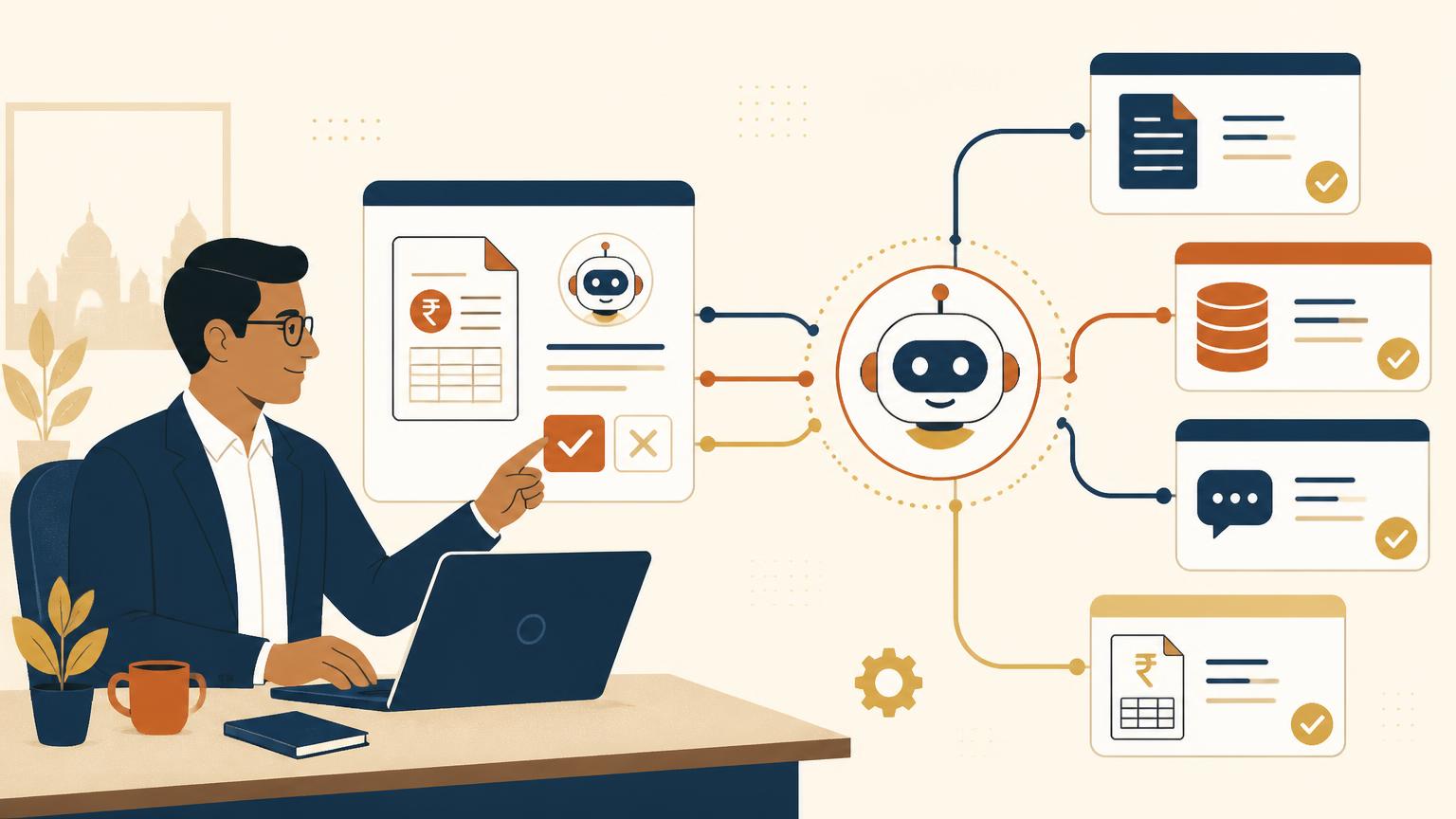
Modern teams do not need another tool that only moves tasks from one queue to the next. They need a workflow automation platform that can understand goals, coordinate across systems, handle exceptions, and keep people in control when judgment matters. Mimasa AI brings an agentic approach to enterprise workflow automation, helping organizations automate workflows that are too dynamic, data-heavy, or cross-functional for traditional rule-based systems.
For business leaders, IT teams, and process owners, the opportunity is practical: reduce repetitive work, improve process consistency, and give employees more time to focus on decisions that require context and creativity.
What Makes Mimasa AI Different From Traditional Workflow Automation?
Mimasa AI differs from traditional workflow automation by using AI agents that can interpret context, make decisions within defined guardrails, and execute work across connected systems. Traditional automated workflow software is valuable for predictable, repeatable steps, but it often struggles when inputs are unstructured, approvals change, exceptions appear, or multiple systems need to coordinate in real time.
A conventional workflow automation tool might route an invoice to the right approver when a field matches a rule. Mimasa AI is designed for a more adaptive automation workflow: understand the invoice, validate the data, check related records, flag anomalies, request missing information, and continue the process once the issue is resolved. That shift matters because many enterprise processes are not clean, linear, or fully predictable.
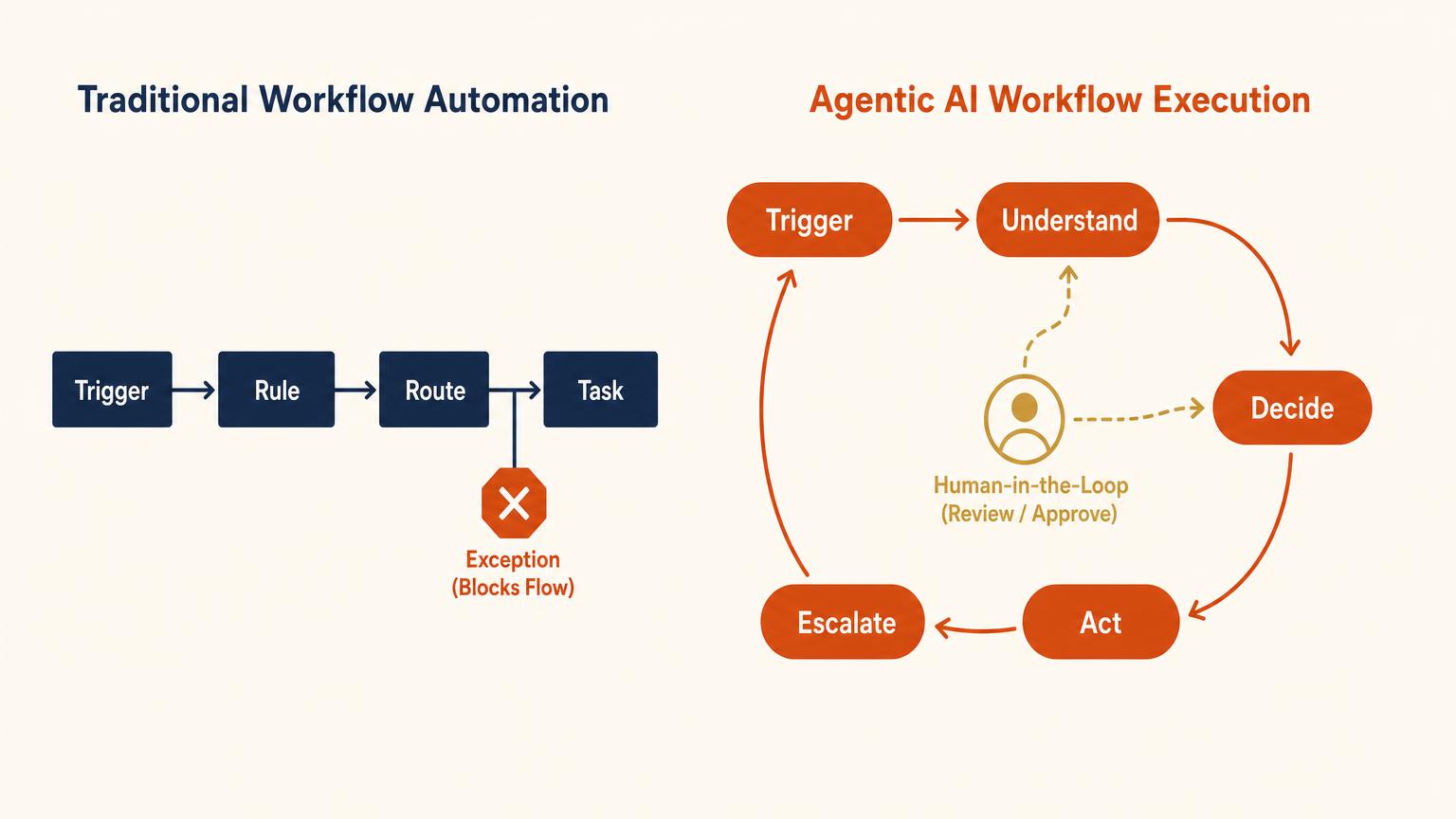
The difference is not simply “AI added to automation.” It is a move from static task routing toward agentic execution. Instead of only waiting for a trigger and following a fixed path, AI agents can work toward a business outcome, collaborate with other agents or humans, and adjust next steps based on the situation.
The Limits Of Rule-Based Automation
Traditional workflow automation software has helped organizations standardize approvals, reduce manual handoffs, and speed up routine work. It remains useful when the process is stable, the data is structured, and the decisions are straightforward. But as workflows become more complex, the cracks become visible.
A rule-based system usually needs someone to define every branch in advance. If a customer request arrives with missing details, an invoice does not match a purchase order, or a candidate reschedules an interview twice, the process may stall or require manual intervention. Over time, teams add more rules, more exceptions, and more workarounds until the system becomes difficult to manage.
This is where ai workflow automation tools become more compelling. The goal is not to replace every process map, but to make workflows more resilient. AI automation tools can help interpret emails, documents, tickets, forms, and messages; extract relevant information; recommend or take the next action; and escalate when confidence is low or approval is required. For enterprises, that adaptability can be the difference between automating a small task and transforming an end-to-end process.
Agentic Automation Turns Goals Into Coordinated Action
Mimasa AI positions automation around agents that do more than assist. They can participate in the actual execution of work, coordinating across people, data, and systems. That is important because the most valuable enterprise workflows often stretch across departments.
Consider a travel request. A basic tool might capture the request and route it to a manager. A more intelligent workflow automation platform can validate policy, check budget conditions, request clarification, coordinate approval, and support booking-related steps. The employee experiences a smoother process, while the business gains better traceability and control.
Agentic automation typically follows a practical pattern:
- Trigger: A request, event, document, form submission, ticket, or system update starts the workflow.
- Understand: The AI agent interprets the context, extracts relevant data, and identifies what needs to happen.
- Decide: The system evaluates rules, policies, data signals, and confidence levels to choose the next step.
- Act: The agent updates records, sends messages, creates tasks, requests approvals, or completes approved actions.
- Escalate: When the situation requires judgment, the workflow brings in a human with the context needed to decide quickly.
This model helps automate workflows without pretending every decision should be fully autonomous. The strongest deployments keep human-in-the-loop control where it adds value, especially for sensitive approvals, regulated processes, or unusual exceptions.
Which Enterprise Workflows Benefit Most From AI Automation?
Enterprise workflows benefit most from AI automation when they are repetitive but not simple, high-volume but exception-prone, and dependent on information spread across multiple systems. These are the processes where traditional automation often removes a few manual steps but leaves employees handling the messy work around the edges.
Good candidates usually share several traits:
- They involve unstructured information, such as emails, PDFs, forms, support tickets, chat messages, or notes.
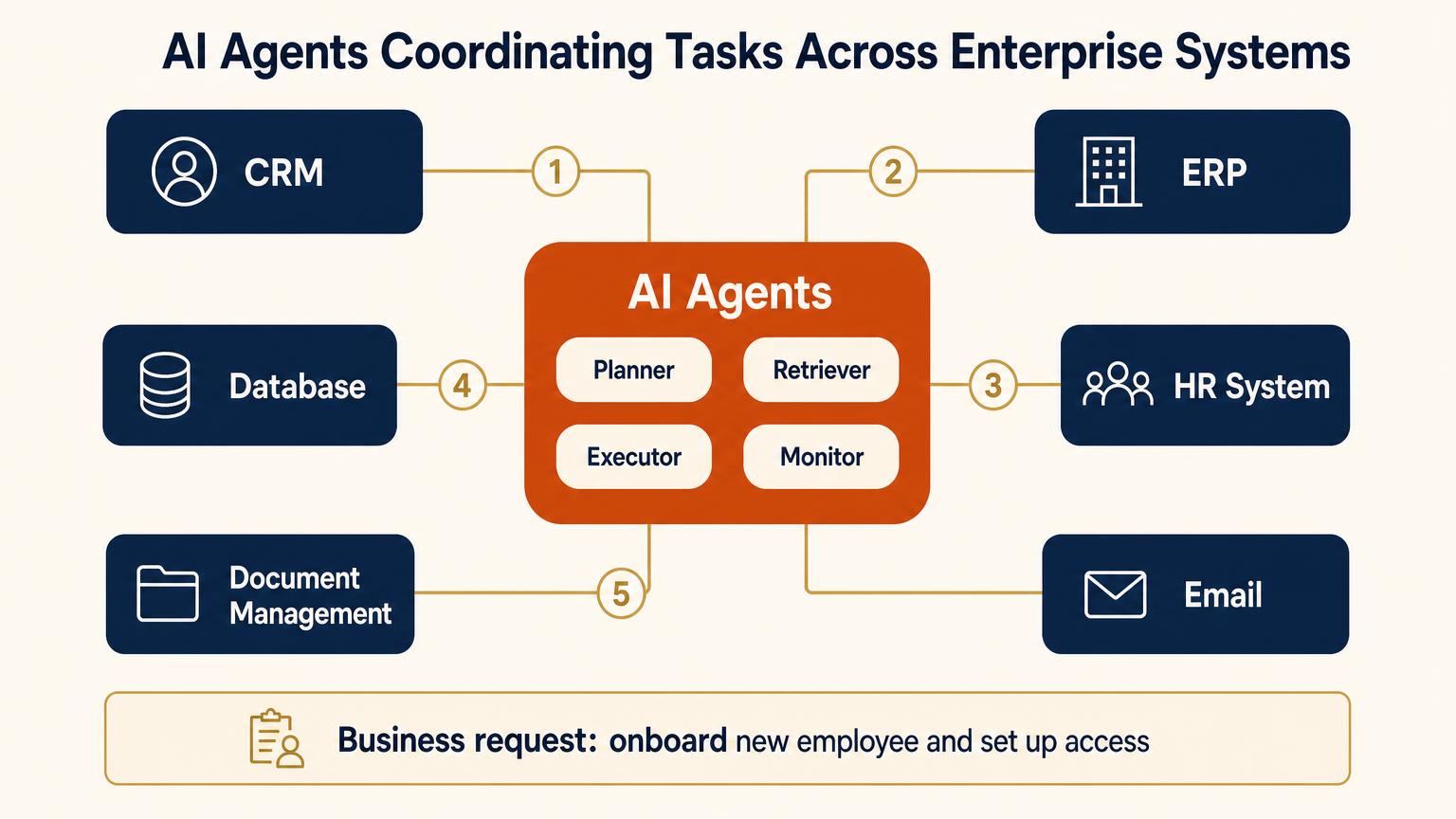
- They require coordination across systems, such as CRM, ERP, HRIS, finance, ticketing, document management, or communication tools.
- They contain frequent exceptions, including missing fields, inconsistent data, policy questions, or approval changes.
- They affect business outcomes, such as revenue speed, customer satisfaction, compliance, hiring velocity, or cash flow.
- They need accountability, meaning teams must know what happened, why it happened, and who approved it.
Common examples include invoice processing, recruitment operations, customer support ticket handling, healthcare claim workflows, mortgage application review, employee onboarding, procurement requests, and internal service desk processes. In each case, the value comes from connecting understanding with execution. The software is not just moving a task forward; it is helping resolve the work.
Mimasa AI As A Connected Workflow Automation Platform
One of the biggest barriers to enterprise workflow automation is fragmentation. Teams often have strong systems for finance, HR, sales, support, and operations, but the workflow itself lives in the gaps between them. Employees copy data, chase approvals, reconcile records, and manually update status across tools.
Mimasa AI is designed as a unified AI platform that connects with 180+ systems, helping organizations orchestrate work across the tools they already use. That connectivity matters because the best workflow automation software should not force every department into a new operational hub. It should meet teams where work already happens and reduce the manual glue between applications.
The platform’s event-driven and decision-driven approach supports adaptive workflows. Instead of relying only on a static checklist, Mimasa AI can respond when something changes: a ticket priority increases, a document arrives, an approval is delayed, or a record no longer matches expected conditions. For enterprise teams, that makes automation more responsive and more aligned with real business operations.
Security, traceability, and control are also essential. In enterprise environments, leaders need to know what an agent did, which data it used, when a human reviewed the action, and how exceptions were handled. Mimasa AI’s emphasis on enterprise-grade governance and human-in-the-loop control helps address the trust gap that often slows adoption of ai automation tools.
A Practical Example: Automating Invoice Processing
Invoice processing is a strong example because it includes structured data, unstructured documents, approvals, policy checks, and exceptions. A traditional automation workflow may route an invoice based on department, amount, or vendor. That helps, but finance teams may still manually extract data, compare it with purchase orders, identify missing information, and follow up with stakeholders.
With an agentic approach, Mimasa AI can support a more complete process:
- Capture the invoice from email, upload, or a connected system.
- Extract key details such as vendor, amount, due date, line items, and purchase order references.
- Validate the invoice against available records and business rules.
- Identify mismatches, duplicate risk, missing data, or approval requirements.
- Route the invoice to the right person with context, not just a blank task.
- Update relevant systems after approval and continue the payment workflow.
- Escalate unusual cases to a human reviewer before action is taken.
This is the practical advantage of ai workflow automation tools: they can reduce the repetitive burden while still respecting controls. Finance teams are not asked to trust a black box. They gain a system that can do the preparation, coordination, and follow-through, while people remain involved where policy, risk, or judgment requires it.
Implementation Works Best When It Starts With Business Impact
Successful enterprise automation does not begin with the question, “Where can we use AI?” It begins with a clearer question: “Which process is slowing the business down, and what outcome do we need to improve?” That framing keeps the project focused on measurable value instead of novelty.
Before deploying a workflow automation tool, teams should identify a process with enough volume, pain, and repeatability to justify automation. They should also map where exceptions happen, which systems are involved, which decisions require human approval, and what data the AI will need to work effectively.
A practical implementation checklist includes:
- Choose a high-impact use case first. Start with a workflow where delays, errors, or manual coordination create visible business friction.
- Define the outcome clearly. Focus on goals such as faster cycle time, fewer manual touches, better routing, improved visibility, or more consistent approvals.
- Design for exceptions. Do not only map the happy path. Identify where the workflow should pause, ask for more information, or escalate.
- Integrate with core systems. Automation is strongest when it can read and update the tools where work is already tracked.
- Set human-in-the-loop rules. Decide which actions can be completed automatically and which require review.
- Train users early. Employees need to understand how the system helps them, when to intervene, and how feedback improves the process.
- Monitor performance over time. AI-enabled workflows should be reviewed for accuracy, adoption, drift, and business impact.
This progressive approach supports confidence. Rather than trying to transform every process at once, organizations can prove value, refine governance, and expand automation where it makes sense.
Governance Builds Trust In AI-Powered Work
For many leaders, the concern is not whether AI can automate tasks. The concern is whether it can do so safely, transparently, and in line with business policy. That is why governance must be built into the operating model from the beginning.
Strong governance defines what agents can access, what they can change, which actions require approval, and how decisions are logged. It also clarifies ownership. Business teams should understand the process goals, IT should validate integration and security requirements, and compliance or risk stakeholders should review sensitive workflows.
This is especially important in regulated or data-sensitive environments. Enterprise workflow automation must balance speed with accountability. A well-governed platform gives teams the benefits of automation while preserving the oversight needed for responsible adoption.
From Automation Software To Intelligent Operations
The next phase of automation is not about replacing every employee action with a machine action. It is about creating intelligent operations where routine coordination happens faster, exceptions are easier to manage, and people spend more time on judgment, relationships, and improvement.
Mimasa AI reflects this shift by focusing on execution, collaboration, connectivity, and control. As organizations evaluate automated workflow software, the key question is no longer whether a tool can automate a sequence of steps. It is whether the platform can help the business respond to real work as it changes.
A modern workflow automation platform should make processes easier to run, easier to monitor, and easier to improve. For enterprises dealing with complexity across departments and systems, that is where agentic AI can create meaningful value.
Key Takeaway
Mimasa AI helps organizations move beyond rigid automation toward adaptive, agentic workflows that can understand context, coordinate actions, and keep humans involved when it matters. For teams evaluating ai automation tools, the best starting point is a real business process with clear pain, measurable value, and enough complexity to benefit from intelligence.
When implemented thoughtfully, AI-powered workflow automation software can reduce operational drag, improve consistency, and give teams more capacity for higher-value work. The revolution is not automation for its own sake; it is better work, designed around outcomes, accountability, and people.
Automate A Real Workflow With Mimasa AI
Bring one high-impact process — invoices, onboarding, or service requests — and we will show you how agentic automation would run it end to end.